Culture is the total way of life…

ÀsÀNigHT WorldwideÀsÀNigHTWorldwide
Ṣàngó

Ṣàngó

The Thunderous King of Yorùbáland

Red & White

Ṣàngó stands at the meeting point of kingdom and cosmos — remembered as a king, honoured as an Òrìṣà, represented through thunder, lightning, fire, and the double-headed axe. His is the great Yorùbá story of what happens when power is placed in human hands.

King and Òrìṣà

Ṣàngó (also Shango or Sango) is one of the most renowned Òrìṣà — associated with thunder, lightning, fire, royal authority, courage, justice, and the consequences of the misuse of power. He is traditionally remembered as a former Aláàfin (king) of Ọ̀yọ́ who, after his earthly life, became associated with the divine forces of thunder and lightning.

This creates a profound cultural idea: a powerful human ruler can become part of sacred memory. His story lives simultaneously within history, oral tradition, mythology, ritual, and identity — the king becomes the Òrìṣà.
The Ọ̀yọ́ Connection

To understand Ṣàngó is to understand Ọ̀yọ́, one of the most powerful precolonial Yorùbá kingdoms. The Aláàfin ruled, but not without restraint: the Ọ̀yọ́ Mèsì council, led by the Bàṣọ̀run, checked royal power. Ṣàngó represents enormous authority — yet Yorùbá tradition insists that authority must be restrained by institutions and responsibility.

Thunder, Lightning & Fire

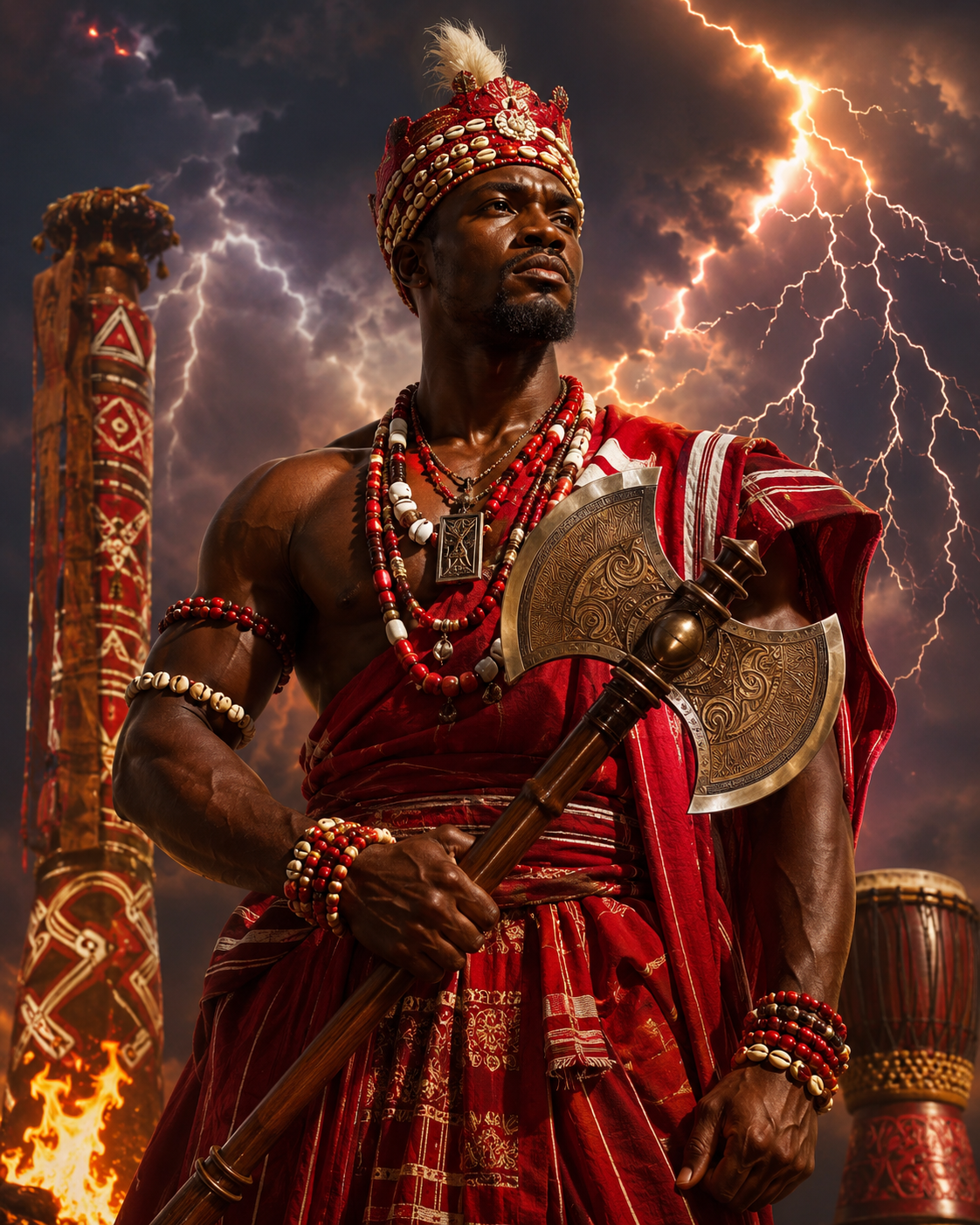
Thunder is Ṣàngó's voice; lightning, his weapon; fire, his power. These forces symbolise power, warning, judgment, and transformation. Fire warms, cooks, and transforms — but uncontrolled, it destroys. This duality defines Ṣàngó: power can build or destroy, leadership can protect or oppress.

The Ọ̀ṣẹ́ Ṣàngó

His most recognisable symbol is the ọ̀ṣẹ́ Ṣàngó, the stylised double-headed axe. Its symmetry suggests balanced, concentrated power and the ability to act decisively. The double edge teaches that power must be balanced, strength controlled, justice kept from becoming revenge, and authority held accountable.

Justice & the Ethic of Consequence

Ṣàngó is strongly associated with justice — his thunder imagined as exposing wrongdoing and punishing those who violate moral order. Justice implies order and accountability: actions have consequences. The greater the authority, the greater the responsibility. Authority without accountability eventually becomes dangerous.

Power & Self-Mastery

Traditional stories portray Ṣàngó as passionate, forceful, proud, and quick to anger — a moral lesson, not mere decoration. A king who cannot control his anger can destroy the very people he protects. The person who wants to control others must first learn to control himself: self-mastery must come before the mastery of others.

Ọ̀ya, Ọ̀ṣun & Obà

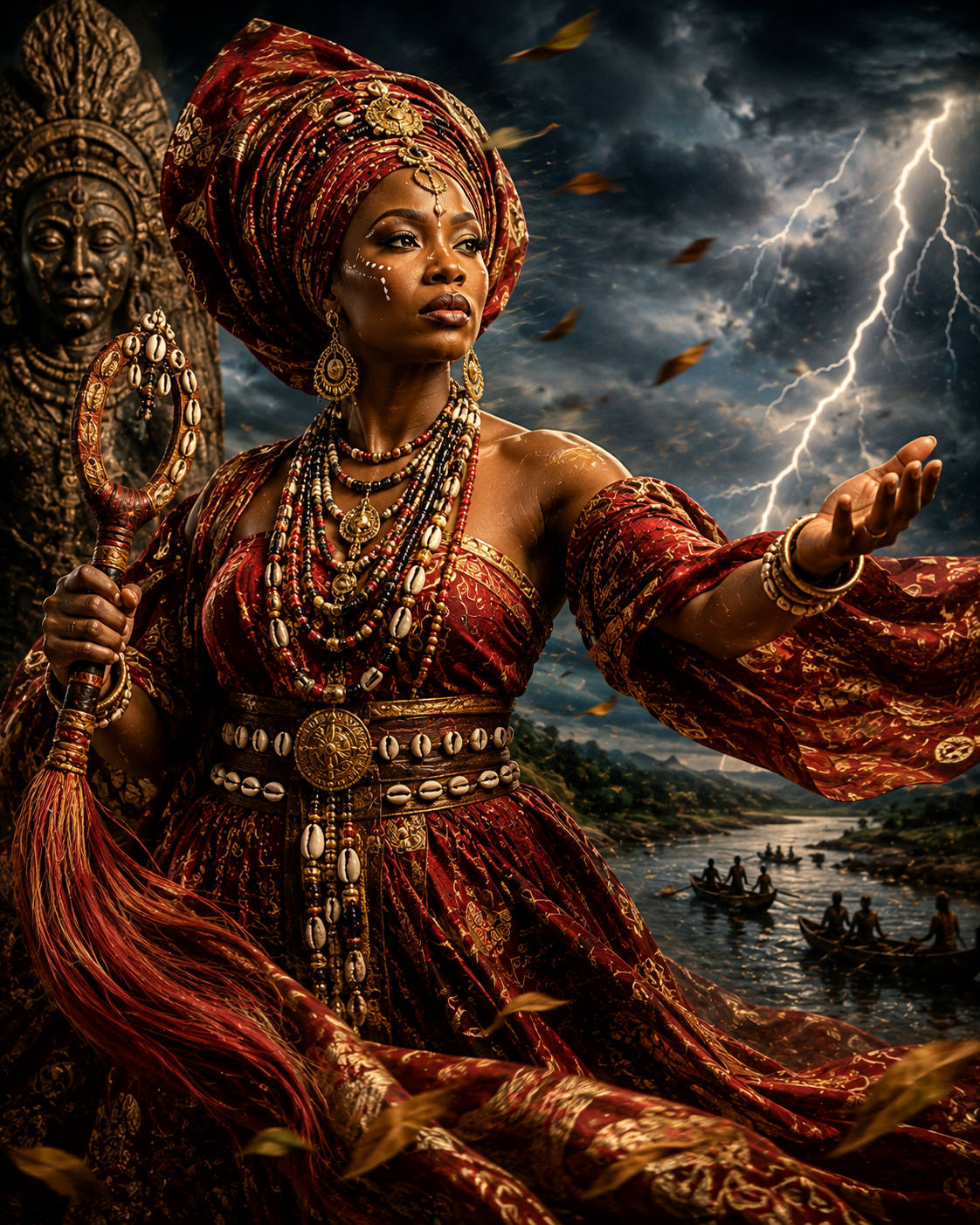
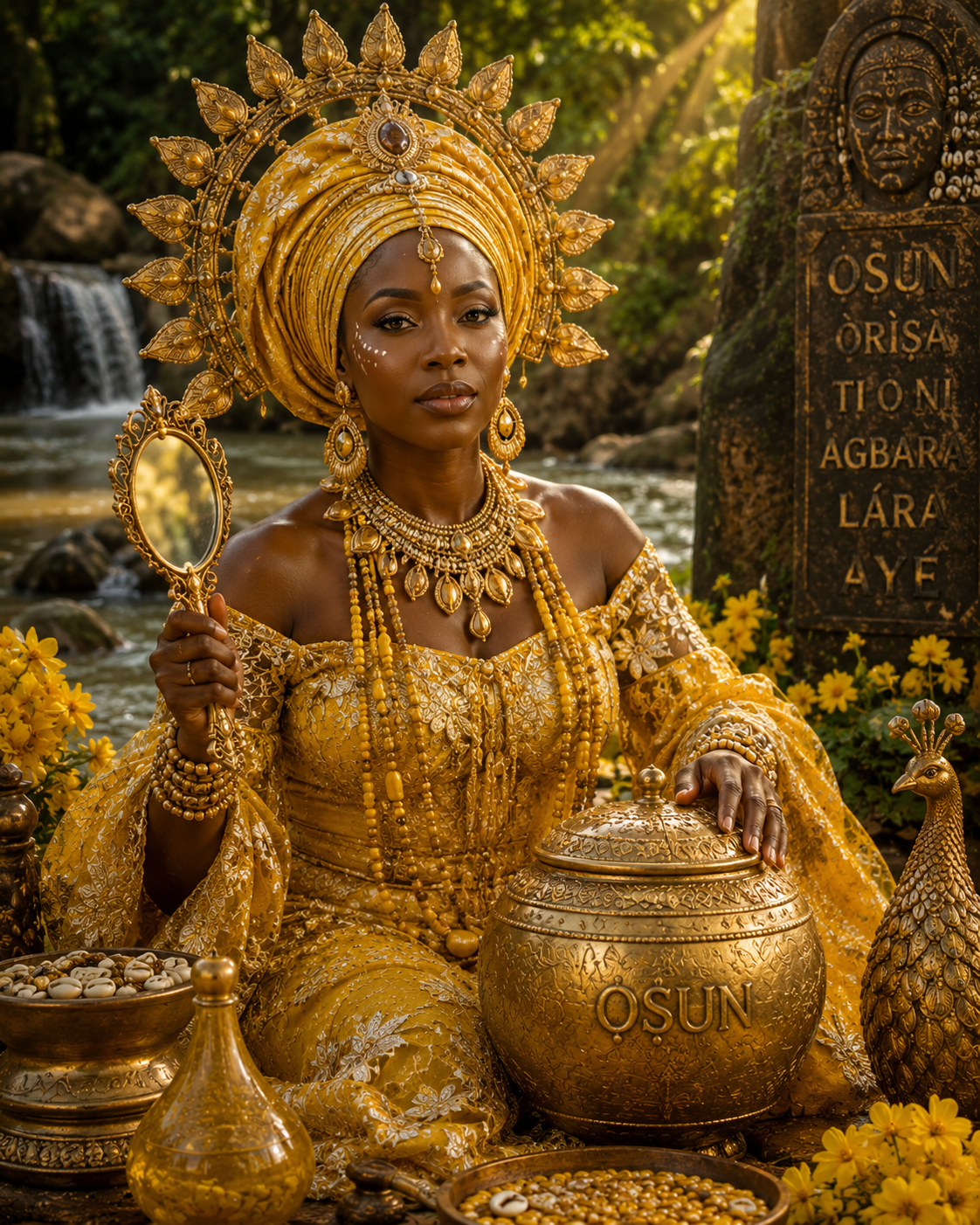
Ṣàngó's mythology includes powerful female Òrìṣà — Ọ̀ya (winds and storms), Ọ̀ṣun (rivers, beauty, diplomacy), and Obà (the Oba River) — each with her own identity, power, and significance. They should be studied on their own terms, not reduced to 'wives of Ṣàngó.' Thunder and storm imagery makes his bond with Ọ̀ya especially vivid.

Ṣàngó in the Diaspora

Carried across the Atlantic through the transatlantic slave trade, Ṣàngó became Xangô in Brazil and Changó in Cuban Lucumí, with related forms across the Caribbean. Connected to Yorùbá heritage yet shaped by new histories, his survival is a story of extraordinary cultural resilience — the thunder of Ṣàngó still echoes worldwide.

Join the Community

Preserving Heritage. Sharing Knowledge.

Receive new articles, festival stories, and cultural insights from ÀsÀNigHT Worldwide — delivered with care, rooted in authenticity.