Culture is the total way of life…

ÀsÀNigHT WorldwideÀsÀNigHTWorldwide
Ọ̀ṣun

Ọ̀ṣun

Òrìṣà of Fresh Water, Love, Fertility, Beauty & Diplomacy

Gold & Yellow

Ọ̀ṣun is the sweet water that gives life — mother, healer, diplomat, and sacred feminine power. Hers is the great Yorùbá teaching that softness can be strength, that beauty can carry purpose, and that whatever nourishes life must itself be protected.

Who Is Ọ̀ṣun?

Ọ̀ṣun — known as Oxum in Brazil and Ochún in Cuba — is one of the most beloved and widely recognised Òrìṣà of Yorùbá tradition. She is associated with fresh water, rivers, fertility, motherhood, love, beauty, sensuality, prosperity, sweetness, healing, diplomacy, creativity, feminine power, emotional intelligence, and social harmony.

But she should never be reduced simply to 'the goddess of beauty.' She represents something far deeper — the power of what nourishes life. Water nourishes; motherhood nourishes; love nourishes; community nourishes. She is soft without being weak: gentle and generous, yet formidable when disrespected.

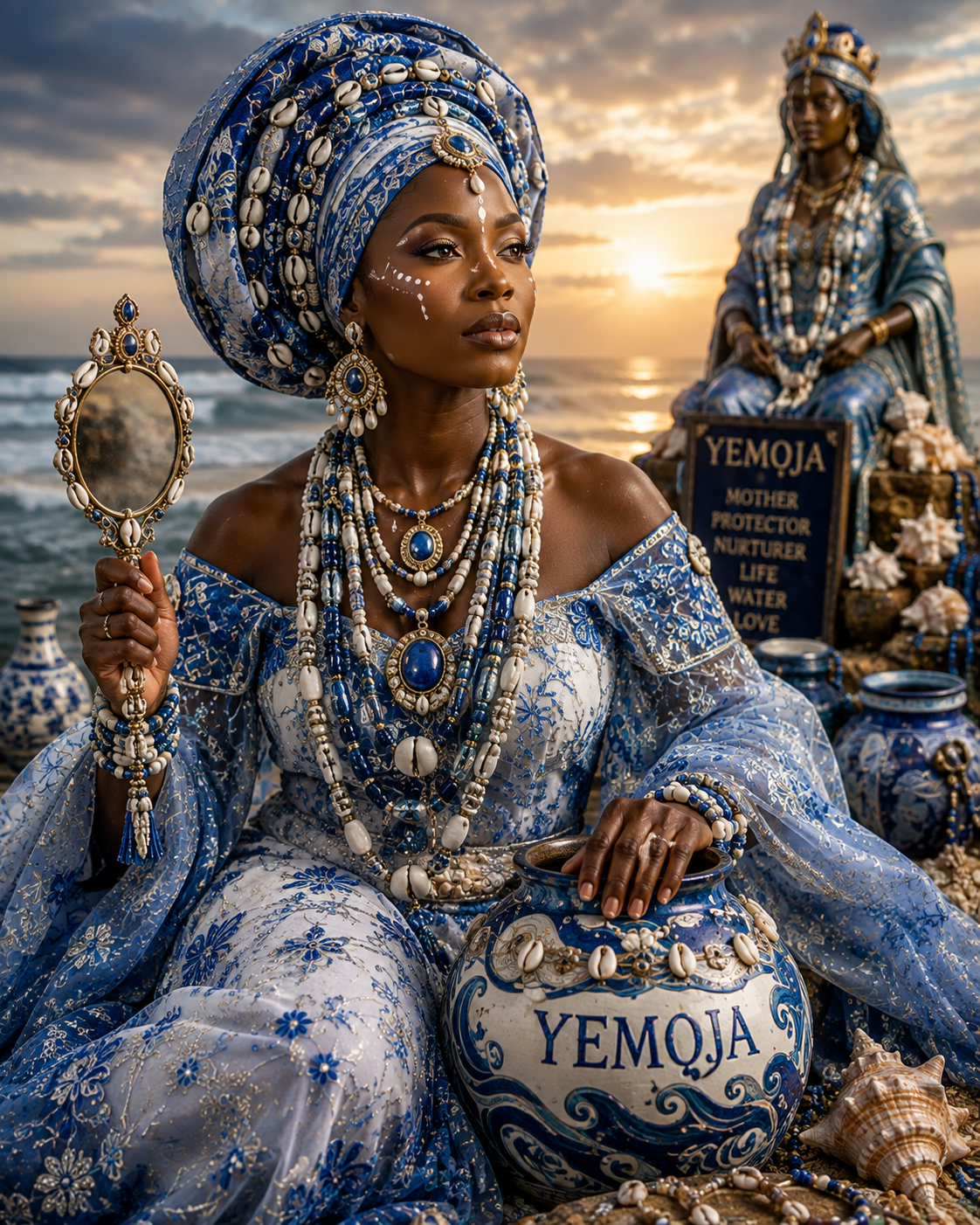
The River & the Power of Water

The river is Ọ̀ṣun's central symbol. A river moves, nourishes, connects communities, creates fertile land, and can be calm or powerful. It makes her an extraordinary metaphor for the ability to flow, adapt, nourish, transform, connect, and create life.

Without water, civilisation cannot survive — it supports people, animals, plants, agriculture, fishing, trade, and community. Water is not merely a resource; it is life itself. Her tradition reminds us: protect the water, and you protect life.

The Ọ̀ṣun-Òṣogbo Sacred Grove

Her most famous sacred landscape is the Ọ̀ṣun-Òṣogbo Sacred Grove — a UNESCO World Heritage Site, a sacred forest along the Ọ̀ṣun River containing shrines, sculptures, sanctuaries, and works of art dedicated to Ọ̀ṣun. It is one of the last remaining primary high-forest landscapes in southern Nigeria and a powerful symbol of Yorùbá identity.

The grove is not an archaeological ruin but a living sacred landscape: the forest is alive, the river still flows, and its rituals and annual festival continue. It is a museum without walls — where religion, nature, art, architecture, and community exist together.

Nature, Ecology & Environmental Responsibility

Ọ̀ṣun demonstrates a core Yorùbá principle: nature is not merely scenery. A community that considers a forest sacred is less likely to treat it as disposable property; a sacred river is more than a commercial resource. Culture can itself become a form of environmental protection.

This gives her tradition urgent modern relevance. Climate change threatens freshwater systems everywhere — pollution, drought, flooding, contamination, plastic waste, and deforestation. For a tradition centred on fresh water, protecting the rivers is not only an environmental duty but an act of cultural preservation.

Fertility, Motherhood & Creativity

Ọ̀ṣun is strongly associated with fertility — human, agricultural, creative, and economic. Fertility should not be read only as pregnancy; it is the capacity to create and sustain life. Her motherhood embodies nurturing, protection, patience, sacrifice, love, and continuity — and a mother who nurtures life and fiercely protects it holds real power.

Creativity is another form of fertility: an artist gives birth to an idea, a musician to a song, a writer to a story, an entrepreneur to a business. This makes Ọ̀ṣun a powerful symbol for artists, mothers, and creators alike — the power to bring something new into existence.

Feminine Power & the Power of Softness

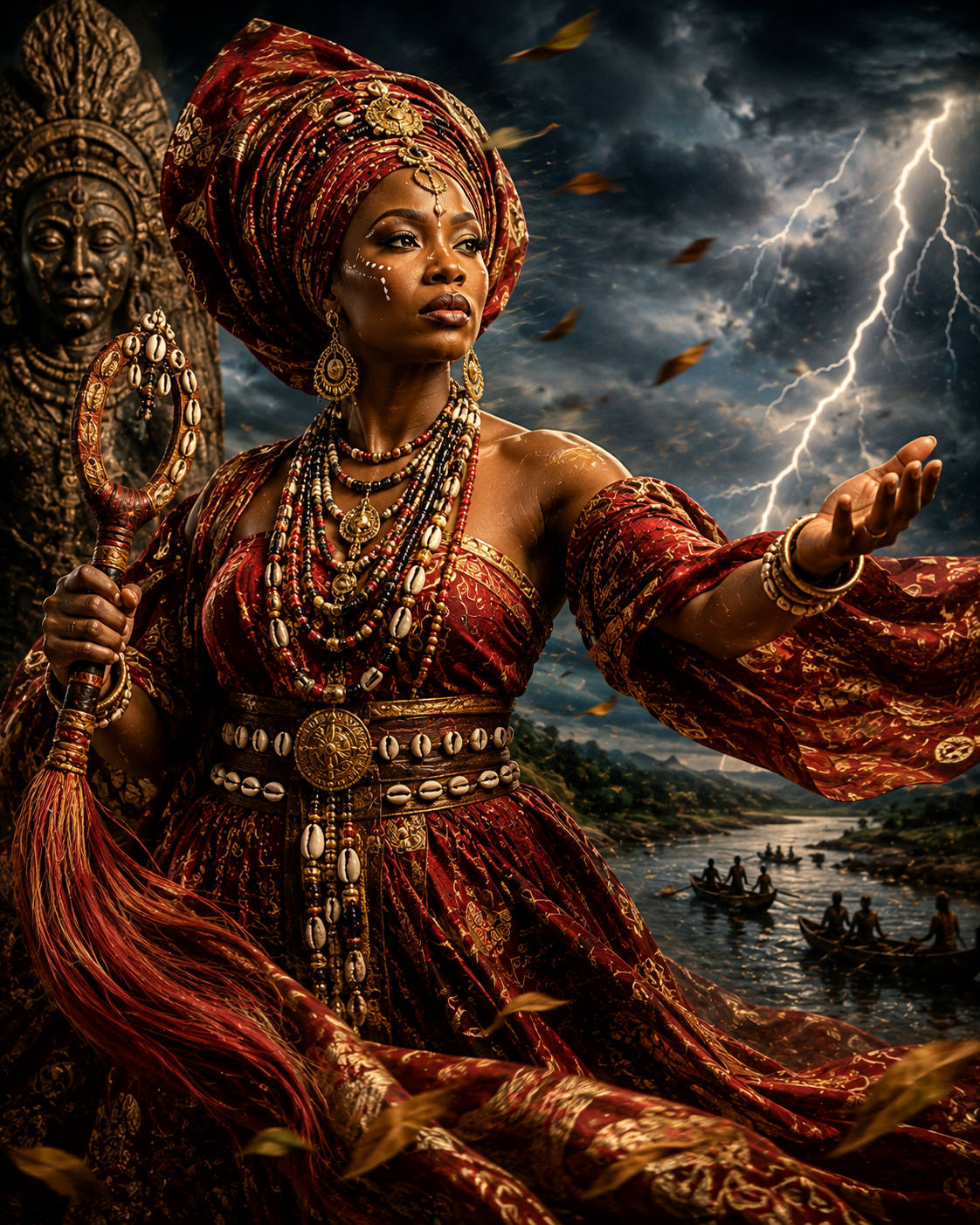
One of Ọ̀ṣun's most important lessons is that feminine power need not imitate masculine power. Power does not always look like war, violence, or domination — it can also be beauty, intelligence, diplomacy, persuasion, empathy, creativity, and nurturing influence.

The modern world often mistakes softness for weakness; Ọ̀ṣun challenges this. Water is soft, yet water carves stone. A gentle river can reshape a landscape, a mother's love can transform a child, a diplomat's words can prevent a war. Softness can possess enormous power.

Beauty, the Mirror & Self-Worth

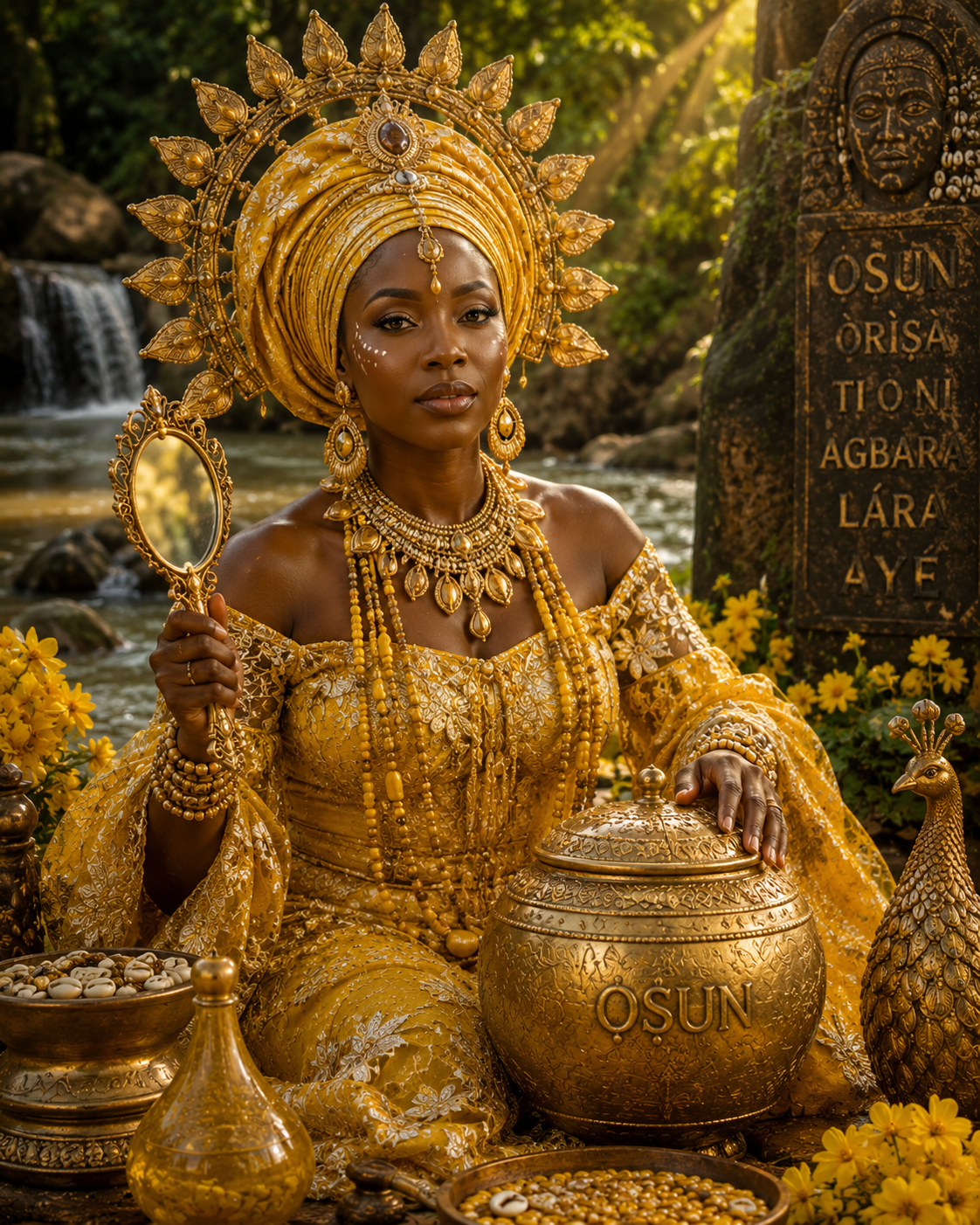
Ọ̀ṣun is famously associated with beauty — beads, brass, mirrors, jewellery, fine cloth, and elegant adornment. But beauty in her tradition is not superficial; it connects to self-respect, dignity, creativity, and confidence. Beauty carries social power, yet beauty without wisdom becomes empty. True elegance includes character, intelligence, grace, and self-control.

The mirror asks more than 'Am I beautiful?' It asks 'Who am I? How do I treat people? What kind of person am I becoming?' Her symbolism inspires healthy self-worth: care for yourself, value your dignity — but never confuse self-love with arrogance, for true self-worth does not require making others feel worthless.

Love, Sweetness & Boundaries

Ọ̀ṣun's love is more than romantic attraction — it is the power of connection, requiring trust, communication, patience, respect, and honesty. She is also described through 'sweetness': pleasant speech, kindness, affection, and generosity. But too much sweetness can become dangerous, and this creates an important balance.

Being compassionate does not mean allowing everyone access to you; being loving does not mean accepting abuse; being generous does not mean allowing exploitation. Ọ̀ṣun's softness coexists with boundaries: attraction alone cannot sustain a relationship — beauty attracts, but character keeps people connected.

Diplomacy & the Indispensable Woman

A widely transmitted tradition tells how the male Òrìṣà attempt a divine mission but cannot succeed without Ọ̀ṣun — her absence becomes the missing element. This communicates a profound principle: a community cannot thrive when half of its wisdom is excluded. Her contribution is essential, not ornamental. No society can afford to silence its women.

Diplomacy is the ability to achieve results without unnecessary violence — through persuasion, timing, emotional intelligence, listening, negotiation, and relationship-building. Ọ̀ṣun's power is often subtle, but subtle does not mean insignificant. Sometimes the wisest strategy is to listen, observe, understand, and choose the right moment.

Emotional Intelligence & Leadership

Emotional intelligence means understanding your emotions, other people's emotions, social dynamics, and timing. Ọ̀ṣun understands that human beings are not machines — people respond to respect, kindness, beauty, attention, love, and rejection. Knowing how people feel can change how you lead them.

She offers a model of leadership that need not be loud, aggressive, or militaristic: a leader can influence through trust, communication, compassion, intelligence, and relationship-building. This is especially relevant for modern women — her symbolism shows that femininity can coexist with authority.

Prosperity, Gold & Responsibility

Ọ̀ṣun is associated with wealth and abundance, expressed through gold and the brass objects — crowns, fans, jewellery, ritual figures — prominent in her art. Her wealth flows from the river itself: water produces fertility, fertility produces food, food supports communities, communities create trade, and trade creates prosperity.

But abundance creates responsibility. Prosperity should build security, opportunity, generosity, and community development; wealth becomes destructive when it breeds greed, arrogance, exploitation, or envy. Her abundance symbolism asks a simple question: what will you do with what you have?

Music, Dance, Festival & the Diaspora

Ọ̀ṣun is strongly tied to music, dance, and celebration. Her annual Ọ̀ṣun-Òṣogbo Festival — drumming, singing, praise poetry, and processions — is a major living tradition, and the Arugba, a young woman who carries the sacred calabash, holds a central ceremonial role of continuity. Dance expresses the river itself: flowing, turning, responding, continuing.

Ọ̀ṣun travelled across the Atlantic with enslaved Africans, becoming Oxum in Brazilian Candomblé and Ochún in Cuban Santería — deeply loved figures of rivers, love, beauty, fertility, and wealth. These developed within their own religious environments and are not identical to Yorùbáland Ìṣẹ̀ṣe, but her survival across continents is a story of extraordinary African resilience.

Join the Community

Preserving Heritage. Sharing Knowledge.

Receive new articles, festival stories, and cultural insights from ÀsÀNigHT Worldwide — delivered with care, rooted in authenticity.