Culture is the total way of life…

ÀsÀNigHT WorldwideÀsÀNigHTWorldwide
Ọya

Ọya

Òrìṣà of Wind, Storms, Transformation, the Niger River & Courage

Deep Red & Gold

Ọ̀ya is the wind that announces the storm — warrior, river-mistress, and force of transformation. Hers is the great Yorùbá teaching that change is not always destruction: sometimes the storm is simply the wind carrying us into our next chapter.

Who Is Ọ̀ya?

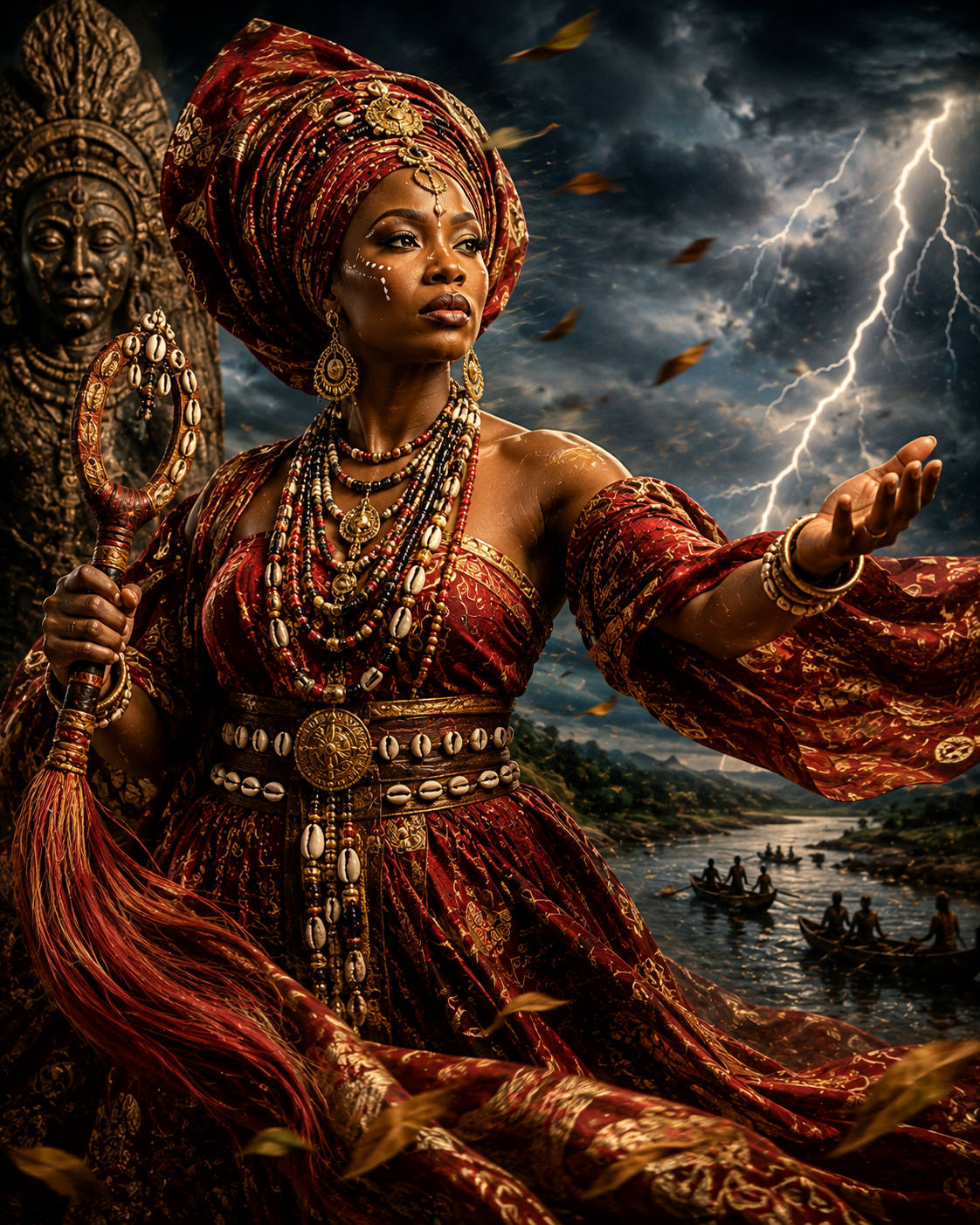
Ọ̀ya is one of the most dynamic and powerful female Òrìṣà in Yorùbá tradition — associated with wind, storms, the Niger River, transformation, courage, feminine leadership, movement, change, justice, and, in many traditions, the boundary between life and death. She is a warrior goddess who accompanies Ṣàngó into battle and the wind that precedes his thunder and lightning.

She is not a quiet force. She is the wind that announces the storm, the power that moves what has become stagnant, the moment when life changes direction. Her most powerful lesson: change is not always destruction — sometimes change is the beginning of transformation.
Ọ̀ya & the Niger River

Though modern popular culture often names her simply a goddess of storms, her relationship with the Niger River — Odò Ọ̀ya — is ancient and central. She is one of the prominent river divinities of the Yorùbá, connecting her with movement, life, commerce, fertility, journeys, change, and the power of nature.

The Niger is one of Africa's great waterways, supporting agriculture, fishing, transportation, trade, communities, and ecosystems. A river never remains completely still — it flows, it changes, it moves. That restless motion makes it a perfect symbol for Ọ̀ya.

The Wind Before the Storm

Wind cannot be seen directly — but you can see what it does: trees moving, dust rising, clouds changing, waves forming. This makes wind an extraordinary metaphor for invisible power, and Ọ̀ya represents forces that may not always be visible yet can completely transform the world around us.

In her mythological relationship with Ṣàngó, the wind arrives first: the atmosphere changes, the sky darkens, and only then come the thunder, the lightning, and the rain. Ọ̀ya is the movement that announces transformation.

The Storm as a Metaphor for Life

A storm can destroy — but it can also bring rain that restores dry land. Nature moves through cycles of calm, disturbance, renewal, and calm again, and Ọ̀ya reminds us that life works the same way. Sometimes life becomes a storm: a marriage changes, a business collapses, a career ends, a family experiences loss, a new opportunity appears.

The storm arrives, but the storm is not necessarily the end. Sometimes it is the beginning of a new chapter. In some traditions Ọ̀ya is even linked with the rainbow that appears afterwards — storm, transformation, renewal, rainbow — reminding us that the storm is not the whole story.

Transformation & Nothing Stays the Same

Transformation is perhaps the most important modern way to understand Ọ̀ya — she represents ending, movement, change, rebirth, and renewal. Contemporary art associates her with storms, winds, last breaths, rebirth, change, and the threshold of the cemetery.

Ọ̀ya reminds us that life is not static. People, families, technology, societies, relationships, cities, cultures, and even landscapes all change. The question is not whether change will happen, but how you will respond when it arrives.

Courage & the Power of Letting Go

Change requires courage. It is easy to remain in a familiar situation — even an unhealthy one can feel comfortable because it is known. Ọ̀ya represents the courage to move, to leave, to begin, to transform, and to face uncertainty. Sometimes transformation requires letting go of fear, old assumptions, toxic relationships, outdated beliefs, resentment, and self-doubt.

Not everything that leaves your life is a loss; some things must leave so something new can enter. Ọ̀ya teaches us to know when the wind is telling us to move — and that an old chapter reaching its end is not always a tragedy but an invitation to grow.

Feminine Power & the Warrior

Ọ̀ya represents an extraordinary form of feminine power. She is not portrayed simply as a mother, wife, lover, or beautiful woman, but also as a warrior, a leader, a force of nature, a protector, and a powerful independent presence — a symbol of feminine leadership and justice. Yorùbá sacred art uniquely represents her riding a horse into battle beside Ṣàngó.

She does not stand behind the king; she rides beside him. The horse symbolises speed, power, mobility, and freedom, reinforcing her dynamic character — she is never stationary. She moves.

Ọ̀ya, Ṣàngó & Ògún

Ọ̀ya is strongly associated with Ṣàngó, the Òrìṣà of thunder and lightning, described as one of his wives and his companion in battle. Together they form a complete natural symbolism: Ọ̀ya is the wind, Ṣàngó the thunder and lightning — first the wind, then the gathering clouds, then lightning, thunder, and rain. The storm becomes whole.

She is also linked with Ògún in various narratives that reveal themes of power, desire, competition, loyalty, war, and transformation. Because these stories differ by community, ÀsÀNigHT Worldwide avoids presenting any single version as the universal account.

Justice & Change

Ọ̀ya's association with justice is important, for justice requires courage, truth, strength, and action. A person who sees injustice but refuses to act may be comfortable, but not necessarily courageous. Ọ̀ya represents the courage to confront what needs to change.

Sometimes justice requires transformation itself. A corrupt system cannot remain unchanged forever; an abusive relationship should not be protected simply because it is familiar; a person cannot heal while refusing to confront the source of their pain. Ọ̀ya is the storm that disrupts the old order.

The Marketplace, Women & Enterprise

Some traditions associate Ọ̀ya with marketplaces and the dynamism of exchange — a place of movement, negotiation, commerce, competition, and opportunity that fits her dynamic character. The marketplace has historically been a vital space for women's economic activity across West Africa, where women served as traders, entrepreneurs, organisers, and producers.

This makes her a compelling framework for women's economic power and for entrepreneurship, which demands the ability to adapt to competition, crisis, technological disruption, and changing behaviour. The entrepreneur must move, change strategy, rebuild, and adapt — that is Ọ̀ya's world.

The Dead, Grief & Rebirth

In many traditions Ọ̀ya has a significant relationship with the dead and the ancestral realm, standing at the threshold between life and death, past and future, old and new — a gatekeeper of the cemetery associated with 'last breaths' and rebirth. Yet the ancestors remain present through stories, names, songs, and cultural practices; death does not mean cultural disappearance.

Grief is itself a transformation: before the loss life was one way; after, it is different, and you cannot simply return to what was. Healing does not mean forgetting — it means learning to carry memory without letting grief destroy your ability to live. The storm eventually moves, the wind changes, the sky clears, and life continues.

The Wind of Change in the Diaspora & Today

Ọ̀ya's traditions travelled beyond Yorùbáland, becoming Iansã in Brazil — associated with winds, storms, warrior power, fire, and movement — and other forms across the diaspora, each preserving African cultural memory while reflecting its own history. Her survival across the Atlantic, through changed names, languages, and rituals, is a testament to cultural resilience.

We now live in an age of enormous change — artificial intelligence, climate change, global migration, social media, economic disruption. This is another 'wind of change,' already blowing. The wind moves across borders without a passport, and so do people; Ọ̀ya teaches that movement does not mean loss. You can adopt new tools while preserving your values, live globally while remembering where you came from, and travel while carrying your identity.

Join the Community

Preserving Heritage. Sharing Knowledge.

Receive new articles, festival stories, and cultural insights from ÀsÀNigHT Worldwide — delivered with care, rooted in authenticity.