Culture is the total way of life…

ÀsÀNigHT WorldwideÀsÀNigHTWorldwide
Ògún

Ògún

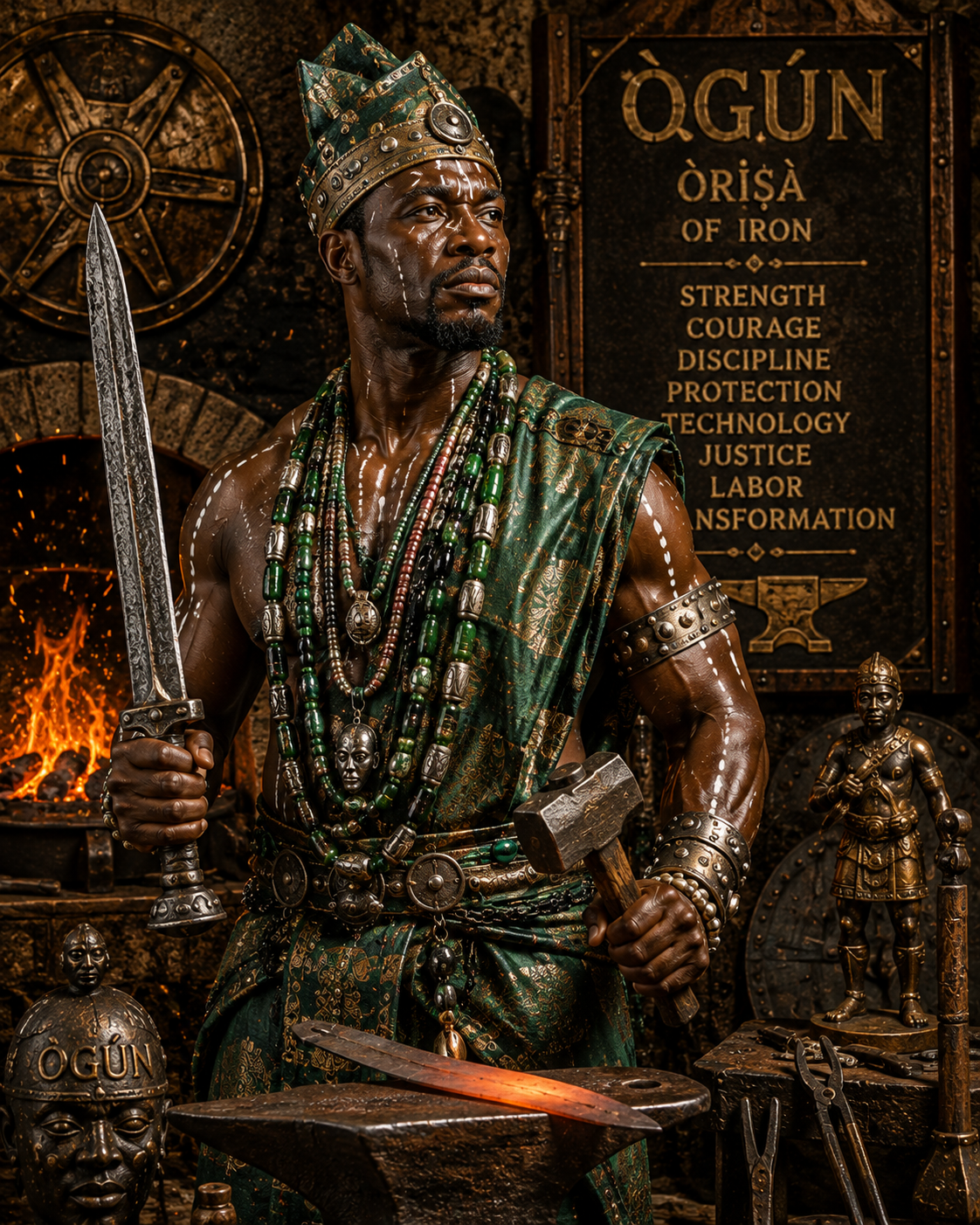
Òrìṣà of Iron, Labour, Technology, Roads & Human Determination

Green & Black

Ògún is the fire that transforms iron and the will that clears the road — master of the forge, patron of every worker and builder. His is the great Yorùbá teaching that civilisation is built by those willing to work, and that powerful tools demand responsible hands.

Who Is Ògún?

Ògún is one of the most powerful and widely respected Òrìṣà — associated with iron, metalworking, blacksmiths, hunting, warfare, labour, roads, agriculture, technology, craftsmanship, industry, courage, perseverance, and the clearing of obstacles. Traditional accounts credit him with introducing iron, opening roads, and clearing fields.

But Ògún is far more than an Òrìṣà of war. He represents something fundamental to civilisation: the power to transform the world through work. The same iron can become a hoe or a weapon — it can build civilisation or destroy it, and that duality is central to understanding him.
Iron & the Rise of Civilisation

To understand Ògún you must understand iron. Before ironworking spread, forests were hard to penetrate, farming was harder, and tools and weapons were different. The development of ironworking transformed societies across West Africa — iron was fundamental to the rise of major Yorùbá kingdoms such as Ifẹ̀ and Ọ̀yọ́.

This is why Ògún became such a powerful cultural symbol: he represents technology that transforms human possibility, the force that turns raw earth into the tools of survival and the foundations of settled life.

The Blacksmith & the Forge

The blacksmith holds a special position in Yorùbá society. He takes something hard and unformed and, through fire, heat, hammering, skill, patience, and strength, makes it useful. A piece of iron becomes a tool; a tool becomes productivity; productivity supports a family, a community, a civilisation. The blacksmith does not simply make tools — he helps make civilisation possible.

The forge is a metaphor for human development. A person, too, can be forged: pressure shapes character, hard work develops skill, failure builds resilience, and discipline turns potential into achievement. The question is never whether life will put you under pressure — it will. The question is what the pressure will make of you.

The Dignity of Labour

One of Ògún's strongest lessons is the dignity of work. Work is not merely something endured for money — it can be creation, service, discipline, skill, self-reliance, and contribution to community. Ògún represents the person who gets up and works: the farmer, blacksmith, hunter, mechanic, builder, engineer, and craftsman.

A society should respect the person who builds, repairs, maintains, drives, farms, welds, and fixes what others cannot. Skill is intelligence expressed through action — working with one's hands is not inferior to working with one's mind.

Ògún & Technology

Technology is often treated as purely modern, but its principle is ancient: human beings use tools to extend their abilities. A hammer extends the hand, a hoe extends the farmer's strength, a machine extends labour, a computer extends thought, and artificial intelligence extends certain forms of cognitive work. Ògún offers a rich cultural framework for thinking about all of it.

A modern reading asks what happens when humanity builds ever more powerful tools — and the answer depends on the character of the hand that wields them. A tool can build or destroy; AI can educate or mislead. The lesson of Ògún is not simply 'technology is good,' but that powerful tools require responsible hands.

The Opener of Roads

Ògún is the opener of roads and clearer of fields. The road represents movement, progress, exploration, commerce, migration, opportunity, and connection. Before there is a road there may be forest — Ògún cuts through and creates passage. Roads connect villages, markets, farms, cities, and kingdoms, linking him directly to economic development.

This gives him a powerful metaphorical meaning. Sometimes the obstacle before you is not meant to be avoided but removed. A difficult situation may require courage, work, discipline, and persistence. Ògún is the energy that says: clear the path — not through blind aggression, but through the determination to keep working until a way becomes possible.

Hunter, Warrior & the Double Edge of Power

Ògún is a hunter and a warrior. The hunter needs observation, patience, knowledge of the forest, courage, and timing — he cannot charge blindly, for strength without awareness becomes foolishness. Iron created powerful weapons, and the sword became his emblem, symbolising strength, protection, and the cutting through of obstacles.

But the sword carries a warning: the same technology that protects can also destroy. A machine can build a house or destroy a city; a computer can educate millions or spread lies. Technology has no morality by itself — the morality belongs to the people who use it.

Agriculture & the Feeding of Communities

Iron tools transformed agricultural work — the cutlass, the hoe, the axe, the plough — making it possible to clear land and cultivate crops. Ògún's importance therefore extends far beyond warfare; he is connected to feeding communities.

The chain is unbroken: a farm requires work, work requires tools, tools require technology, technology transforms land, land produces food, and food sustains people. The story of Ògún is, at heart, a story about survival.

Courage, Discipline & Self-Control

Courage is one of Ògún's most important qualities — but courage is not aggression. It means facing difficulty, accepting risk, protecting others, standing firm, and continuing despite fear, while still exercising restraint. Strength without discipline is dangerous: the warrior, blacksmith, engineer, farmer, and entrepreneur all need it.

His mythology should never be read as permission for uncontrolled violence. Strength can curdle into anger, courage into aggression, determination into stubbornness, protection into domination. The strongest warrior is not always the one who strikes first — sometimes strength means holding back, thinking, and choosing a better strategy. Ògún asks: can you control the power you possess?

Justice, Oaths & the Weight of a Word

Iron objects have historically been connected with oaths and legal processes — the iron anvil could serve as a site for oath-taking. This gives Ògún a strong association with truth, commitment, accountability, and justice. An oath is a promise made publicly, and breaking it carries consequences.

In a world where people make promises casually, Ògún reminds us that commitment matters and that your word should have weight. Power, technology, wealth, leadership, and knowledge all carry responsibility — power without responsibility becomes dangerous.

Ògún Among the Òrìṣà

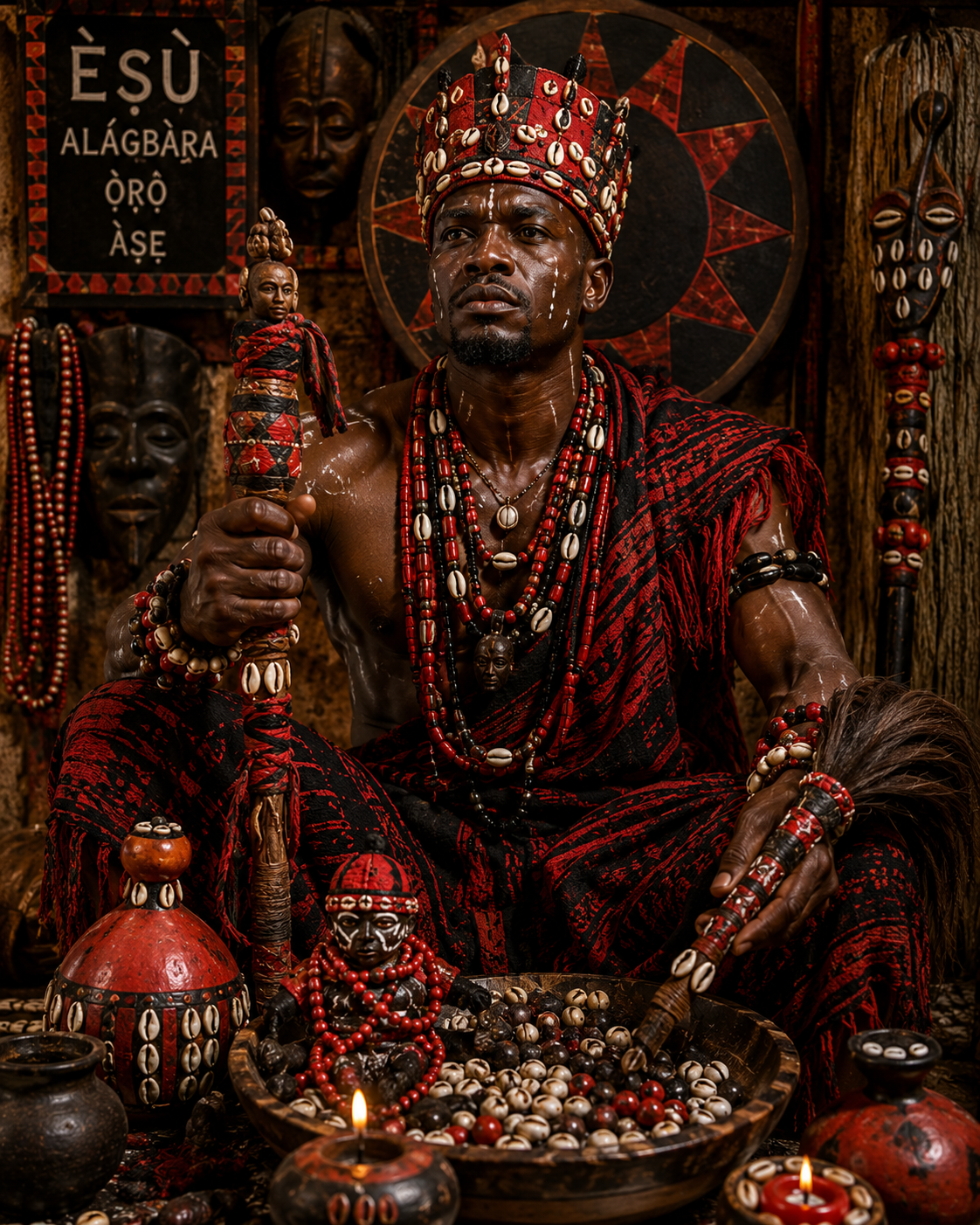
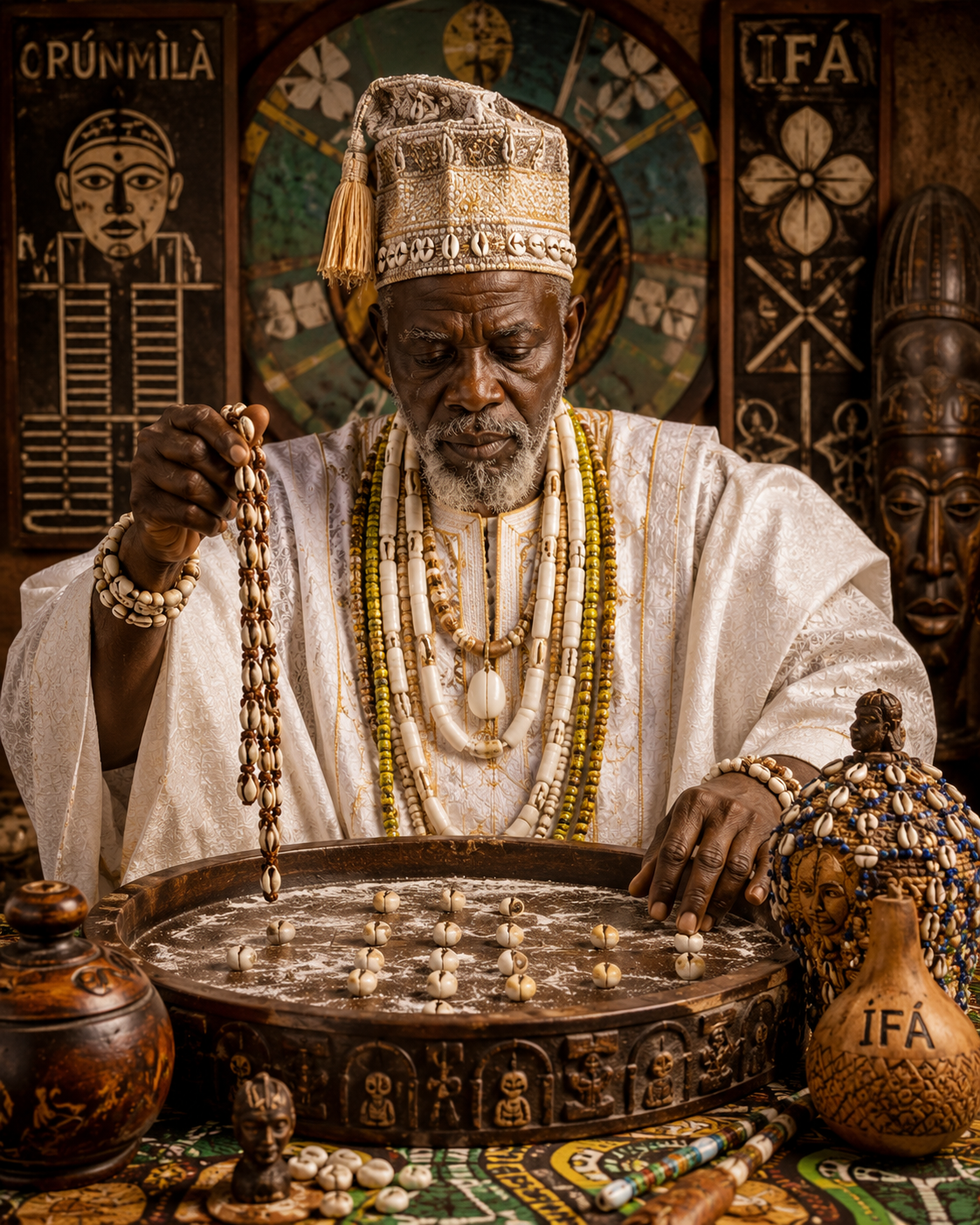
Ògún's meaning deepens in relationship. With Ọ̀ṣun: water nourishes while fire transforms. With Ọ̀rúnmìlà: knowledge without action produces little, but action without wisdom becomes destructive — the ideal is knowledge, skill, and disciplined action together. With Èṣù: Èṣù asks which road you will choose, while Ògún asks whether you are prepared to clear it.

With Ọ̀ṣọ́ọ̀sì he shares the hunting tradition but emphasises tools, iron, and force — together they show two aspects of survival: knowledge of the environment and mastery of tools. And the greatest question technology poses is not 'can we build it?' but 'should we build it?' — the point where Ògún's strength must meet wisdom.

Building the Modern African Future

Ògún's philosophy speaks directly to Africa's development. The continent needs infrastructure, manufacturing, engineering, technology, agriculture, transportation, energy, innovation, and skilled labour. The question is not only 'what can we import?' but 'what can we build, manufacture, and invent?' — and what industries can employ our young people. That is the spirit of the forge.

Young Africans should be encouraged not only to consume technology but to understand how it works: to learn, build, repair, invent, experiment, code, engineer, and create. Electricians, welders, mechanics, machinists, and engineers embody a modern language of Ògún — the dignity of building something that outlives you.

In the African Diaspora

Ògún travelled across the Atlantic with enslaved Africans, surviving as Ogum in Brazilian Candomblé, Ogún in Cuban Lucumí, and Ogou in Haitian Vodou. Each developed its own distinctive ritual and artistic forms within different religious environments while preserving deep Yorùbá ancestry — they share roots but should not be collapsed into one identical system.

Despite enslavement, colonialism, and religious persecution, the memory of Ògún survived. The forge survived in cultural memory; the iron, the road, the warrior, and the craftsman all endured — a powerful testament to African cultural resilience.

Join the Community

Preserving Heritage. Sharing Knowledge.

Receive new articles, festival stories, and cultural insights from ÀsÀNigHT Worldwide — delivered with care, rooted in authenticity.